 Mesa Fence Rental
 Barricade Rental in Mesa
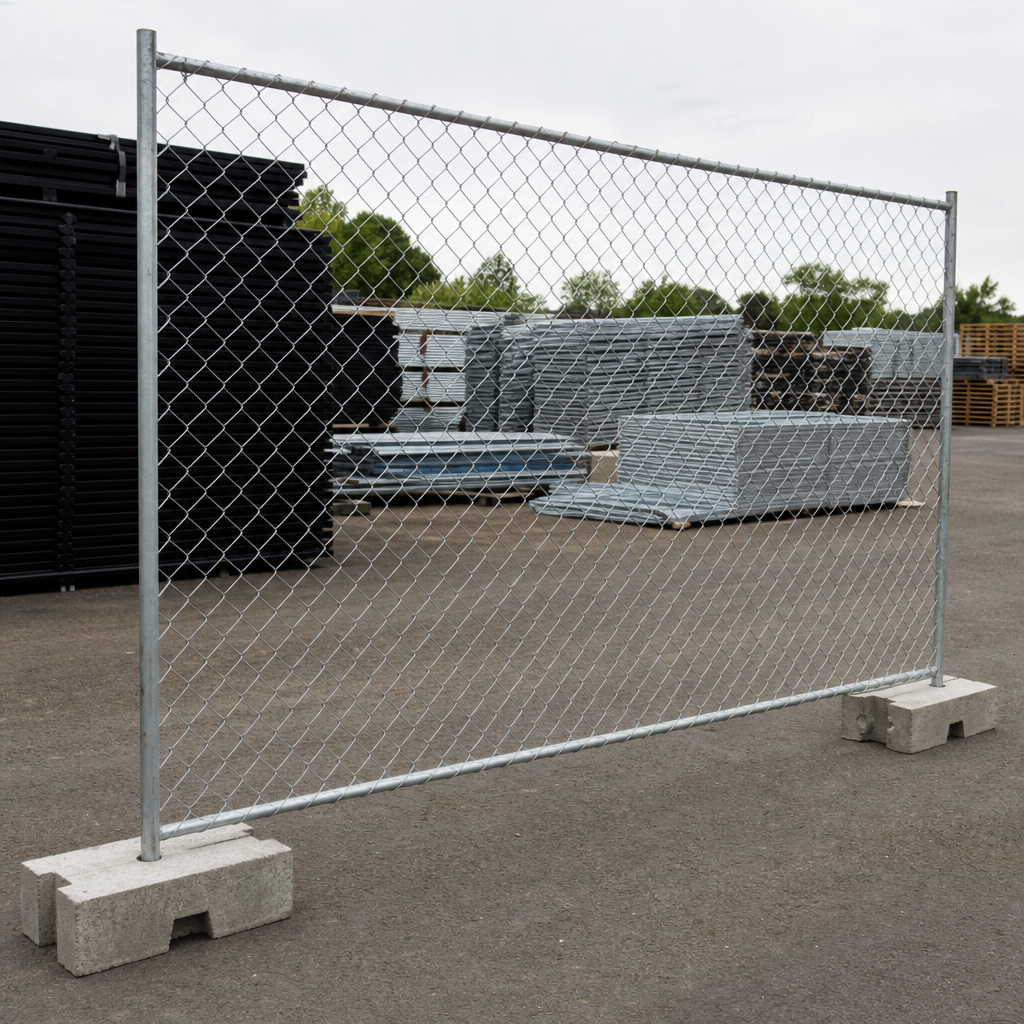
Steel crowd-control barricades rent for $8–$15 per barricade per day in Mesa, with event rates for weekends and volume pricing for long runs. They’re the interlocking, flat-foot type: set by hand, no tools, forming a continuous line for parades, races, queues, stage fronts, and sidewalk closures. We deliver them stacked or place the full line to your site map.
Barricades and fence panels get confused constantly, so let’s draw the line (sorry) up front.
Barricades vs. fence panels: which one is your job?
| Situation | Right tool |
|---|---|
| Keep a crowd out of a street, off a stage, in a queue | Barricades: 43 in tall, step-through-proof, quick to reconfigure |
| Make an event ticketable, enclose a beer garden | Fence panels: 6 ft tall, climb-resistant, screenable |
| Secure a construction site overnight | Construction fencing, barricades stop nobody at 2 a.m. |
| Route pedestrians around sidewalk work | Barricades for the walking line; fence for the hazard itself |
| Start/finish chute for a race | Barricades, reconfigure in minutes as the course opens |
The honest rule: barricades manage cooperative people in daylight. Fence resists uncooperative people after dark. Lots of events need both, and it pays to get them quoted together.
Where barricades earn their rent in the East Valley
Spring training crowds. February–March around Sloan Park and Hohokam Stadium means pedestrian surges crossing parking lots and arterials before and after games. Barricade lines turn a 10,000-person shuffle into orderly channels, parking operators and event hosts around the stadiums are exactly who rents these.
Downtown Mesa events. Street festivals, night markets, parades, and holiday events along Main Street run on barricades: closing cross streets to pedestrians-only, fronting stages, protecting vendor rows, and channeling entry queues. Downtown’s light rail line adds a wrinkle, event layouts have to respect the tracks and platforms, and barricade lines are how crowds get held off them.
Races. 5Ks through half marathons across Mesa, Gilbert, and Tempe need corral fencing at the start, pinch-point protection where the course narrows, and a finish chute. Race directors usually know their counts from prior years; if it’s your first year, send the course map with the quote request and ask for the takeoff.
Sidewalk and facade work. When building maintenance or facade work needs a pedestrian detour, barricades define the walking path. Note that work over the sidewalk or in the street triggers City of Mesa right-of-way permitting and possibly a traffic control plan, barricades cover the pedestrian channel; vehicle-rated traffic devices are a separate trade, and we will say so rather than sell you the wrong thing.
Retail and venue queues. Product launches, holiday returns lines, box office queues. Short-term, small counts, cheap to do right.
How many do you need?
Barricades are ~6.5–8 feet wide, so a continuous run takes 13–16 units per 100 feet. Practical adjustments:
- Add 10% spares for openings you’ll create and close during the event (emergency access, vendor resupply, VIP crossings).
- Corners cost nothing: interlocked ends articulate, so lines turn without special pieces.
- Gaps need people. A barricade line with an unstaffed gap is a suggestion, not a barrier. Plan staffing where the line opens.
A 1,000-ft parade frontage is roughly 130–155 barricades. Call it a single truck delivery, placed in a couple of hours with a small crew.
Wind, heat, and other Arizona realities
Steel barricades are heavy and low, so wind is far less of a threat than it is for screened fence panels, but a monsoon outflow will still walk an unlinked barricade across a parking lot. Two rules: always interlock the line (a connected line is dramatically more stable than scattered singles), and skip banner wraps on barricades for June–September events unless you’re prepared to weight them. Banners on barricades are small sails; fifty of them is a spinnaker. Same physics as our monsoon fencing guide covers for windscreen.
Heat is a handling issue: bare steel in July sun will burn hands. Summer setups are best done early morning, by the delivery crew and, we’d suggest, by your volunteers too.
Planning notes organizers are glad they read
ADA and stroller gaps. A continuous barricade line needs planned crossing points for wheelchairs, strollers, and service access, and those points need to be where people actually want to cross, or the crowd invents its own gaps. Put crossings at natural desire lines and staff them.
Emergency vehicle access. Fire and EMS review event site plans in Mesa, and they expect a marked, staffed break in any barricade line on their access route. Interlocked barricades open in seconds when someone knows which joint to lift; they open in minutes of chaos when nobody does. Brief your crew on the breaks.
Sight the line at ground level. Site maps are top-down; crowds are eye-level. Before gates open, walk the line the way an attendee will. You’ll find the two barricades that block a sign, pin a vendor’s door, or aim the queue at a curb. Five minutes of walking fixes what no map shows.
Rental logistics
- Send counts and dates, or send the site/course map and ask for the count to be taken off it.
- Choose drop-off or placement. Palletized drop at your staging point (your crew sets), or our crew places the full line to the map.
- Event happens. Reconfigure freely; they’re hand-portable.
- Pickup. Stack them near the staging point or leave the line standing; either way, confirm the pickup time in writing so they are hauled out on schedule.
Barricades pair naturally with event fencing for the perimeter and privacy screen where you need sightline control. Rates for everything are on the pricing page, and event-permit questions are covered in the FAQ.
Send your map and dates with a quote request. For recurring events, ask us to keep your counts and layout on file so next year’s order is a two-line email. February–March dates around the ballparks go first; everything else books comfortably at two to three weeks out.
Frequently Asked Questions
How much does barricade rental cost in Mesa?
Steel crowd-control barricades run $8–$15 per barricade per day, with event rates for weekend jobs and volume pricing on large orders. Ask for delivery and pickup to be quoted upfront based on count and location.
How many barricades do I need per 100 feet?
Standard steel barricades are roughly 6.5–8 feet wide, so figure 13–16 barricades per 100 feet of continuous line. Add spares for gaps you'll want to open and close during the event, a few extra units beat dragging a line apart mid-show.
Are rental barricades the interlocking kind?
Usually, yes: flat-foot steel barricades with hook-and-loop ends that interlock into a continuous line. They set up without tools, and the flat feet are less of a trip hazard than bridge-foot styles in pedestrian areas. Confirm the style on the quote.
Can barricades be used for street closures in Mesa?
Crowd barricades handle the pedestrian side of a closure. An actual street closure requires City of Mesa approval with a traffic control plan, and vehicle-rated devices (Type III barricades, cones, signage) come from your traffic control provider. Crowd barricades are the line behind them, and we will tell you honestly where our gear stops being the right tool.
Can barricades be delivered stacked for us to place ourselves?
Usually either way. We can drop palletized stacks at your staging point for your volunteers to set, or have our crew place the full line to your map. Crew placement costs more and saves your morning, organizer's choice; ask for both prices.